Learn
Peptides 101
The basics for getting started: what a peptide is, what RUO means, and what to look for in purity, CoAs, and vendors.
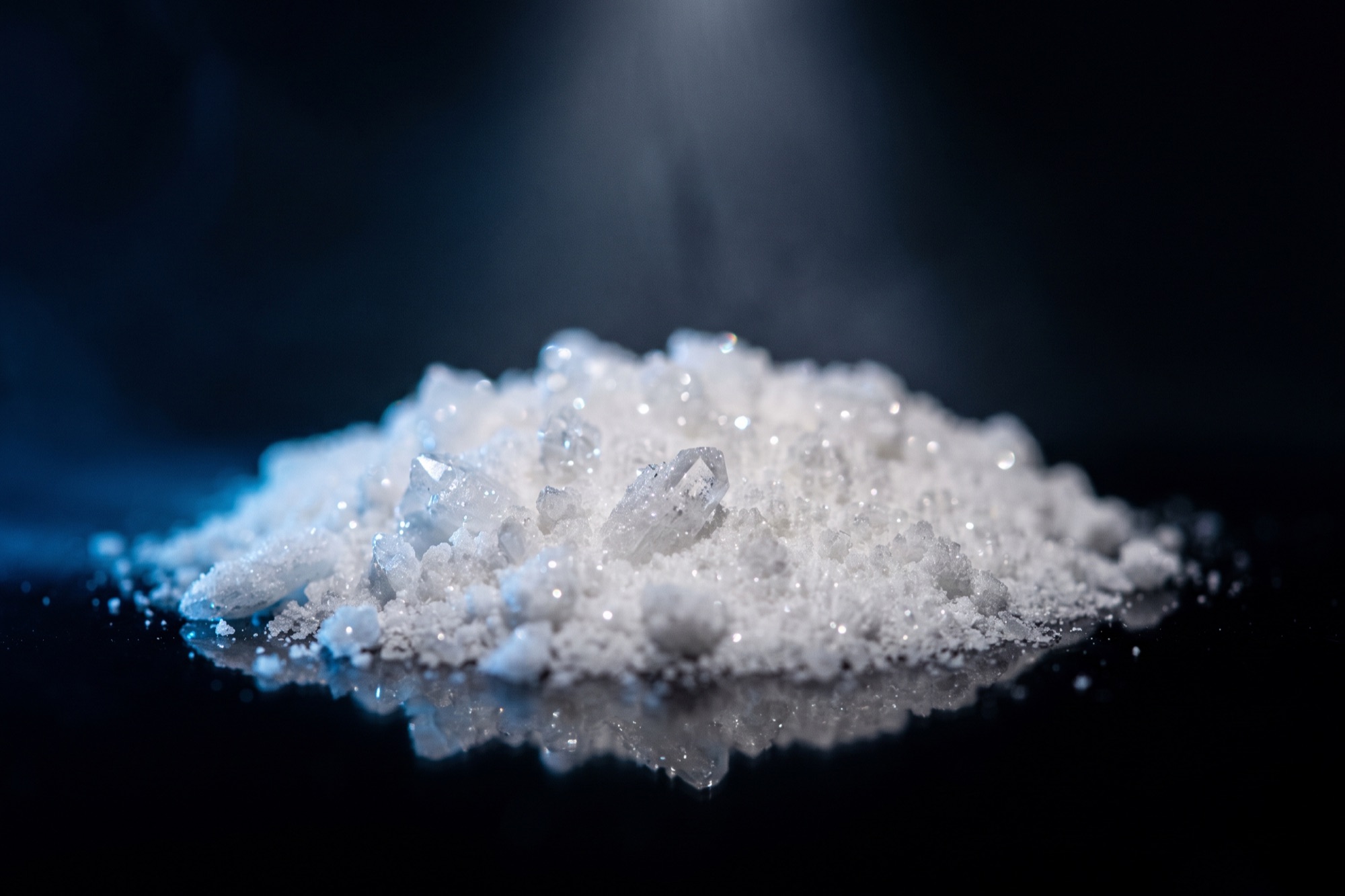
What peptides are
A peptide is a short chain of amino acids linked by a peptide bond. Chain length determines how it's classified: two amino acids form a dipeptide, up to roughly 50 a polypeptide. Above 50 amino acids, once the chain folds into a fixed three-dimensional shape, researchers call it a protein. Peptides sit on the same scale as proteins, just smaller and often still unfolded. Small molecules are a different category altogether: no amino acid chain, a different chemical structure, and usually far lighter. Amino acid, peptide, protein: these three categories form the basic framework the entire field works with.
Research chemicals and the legal framework
Most peptides on this site carry an RUO label, research use only. That means the manufacturer makes them strictly for laboratory and research purposes, not as a drug and not for use in humans. In Germany and the EU, these substances are correspondingly not approved as medication; they haven't gone through the pharmaceutical review that approved drugs undergo. Reputable vendors make that visible: an RUO notice on every product page, no sales to minors, a complete legal notice. Peptide Compass only lists vendors that gate access at 18 and make no health claims on their shop page, that's part of what we check.
Understanding purity
Purity is the key quality metric for peptides and is usually measured by HPLC, an analytical method that separates the components of a sample and quantifies each one. A 98% purity figure means 98% of the measured substance matches the expected peptide, with the rest being impurities or degradation products. There's an important distinction between purity and identity. Purity tells you how clean a sample is; identity tells you whether it's the right molecule at all. Identity is often confirmed with LC-MS, a combination of liquid chromatography and mass spectrometry that verifies molecular weight. A high purity figure without an identity check doesn't tell you much on its own, you need both.
What a CoA is
A CoA, Certificate of Analysis, is the test report for a specific batch. Five details are worth a second look. The batch number needs to match the product you're actually holding. The lab name shows whether testing was independent or done in-house. The test date tells you how current the report is, a CoA from two years ago says nothing about today's batch. The endotoxin value measures bacterial residue from manufacturing, a low number points to clean production. Heavy metal values (lead, arsenic, cadmium) show whether manufacturing residue made it into the sample. If these details are missing entirely, that's already telling you something.
Third-party vs. in-house labs
A CoA can come from two directions. In-house tests are run by the vendor itself, or commissioned by them without independent oversight. Third-party tests come from a lab with no business relationship to the manufacturer, testing the sample independently. The difference is in the incentive: an independent lab has no stake in a particular result. One name that comes up often in this space is Janoshik, a Slovak lab many vendors cite for third-party testing. That's not a recommendation from us, just context: when a CoA names an external lab, it's worth checking whether that name actually exists and can be verified.
Batches and traceability
Legitimate production runs assign a batch number, usually printed on the vial label. It links a single vial to a specific manufacturing run and the CoA that belongs to it. That makes it possible to trace back when a batch was tested and what the result was. Without a batch number, a CoA is worthless, you can no longer confirm the report actually belongs to your product. Our batch check lets you match a batch number against the CoAs we've recorded, so you can see at a glance whether a test exists for it.
Storage and shelf life
Most peptides ship lyophilized, meaning freeze-dried into a powder. In that form, they're substantially more stable than in liquid solution. Two factors matter most: heat and light. Kept sealed and cool, a lyophilized peptide stays stable for a good while; direct sunlight and temperature swings speed up degradation. Once a peptide is reconstituted, dissolved into liquid, the picture changes: shelf life drops noticeably, and temperature swings affect it more than they do in powder form. Reputable vendors state specific storage details on the label or product sheet, worth checking before you buy.
Comparing prices
The vial label often shows only the total amount, say 5 mg or 10 mg, not the actual price. A listing only becomes meaningful once you look at price per milligram, since that's the only way to compare different vial sizes and vendors directly. The list price is rarely the real price either: discount codes and promotions shift the picture substantially, a vendor that looks expensive can end up cheaper with a code than one that looks cheap without. And shipping costs belong in the math too, especially on small orders where they can eat up the price advantage. Our vendor comparison runs the price-per-mg math for you, current codes included.
Evaluating vendors
Before trusting a vendor, a few quick checks are worth your time. Is there a complete legal notice on the site, with a real, serviceable address? Is there an age gate that limits access to 18 and older? What payment methods are accepted, reputable vendors usually offer more than just crypto? And: what do others say about the shop, in forums or reviews, and can that be backed up with real CoAs, or does it stay at opinion? A good review with no evidence behind it carries little weight; a CoA with a verifiable batch number carries a lot. These are exactly the questions behind our five criteria: lab quality, legal framework, shipping, range, and price. The exact weighting is explained in our methodology.
Glossary
The key terms
RUO
Research Use Only, the label for substances intended strictly for laboratory and research purposes.
CoA
Certificate of Analysis, the test report for a specific batch.
HPLC
High-performance liquid chromatography, the analytical method used to determine a sample's purity.
LC-MS
A combination of liquid chromatography and mass spectrometry that confirms a molecule's identity via its molecular weight.
Batch
A single production run, identified by its own batch number.
Lyophilized
Freeze-dried, the most stable storage form for a peptide as a powder.
Reconstituted
Dissolved into liquid, the point at which shelf life starts dropping noticeably.
Endotoxin
A bacterial residue from manufacturing, listed as its own value on a CoA.
Amino acid chain
The basic structure of a peptide, linked together by peptide bonds.
Purity vs. identity
Purity measures how clean a sample is; identity, whether it's the right molecule at all.